
Blog
When a Spring Goes in Cold Weather Around Springdale
Why garage door springs snap in Springdale's cold months, what to check first, and when a 1980s-90s door needs more than a DIY fix. Local housing and climate facts included.
What Is Going On
A torsion spring doesn't care what the calendar says, but cold weather speeds up the end of its life. Steel contracts as it gets cold, and a spring that's already fatigued from a decade or two of daily cycling has less give left in it. That's the moment it lets go - usually first thing in the morning, when the door's been sitting in a cold garage all night and you hit the button on your way to work.
Most of the housing stock in and around Springdale went up between 1979 and 2013, with the bulk of it dating to the 1980s and 90s. That means a big share of the doors in this area are running on original or first-replacement torsion springs that are now 25 to 40 years old. These weren't built for an infinite service life - they were built for the house, and the house has aged. If your garage door is original to a home from that era, the spring inside it has already absorbed three or four decades of temperature swings, and cold is usually what finishes the job.
A broken spring on a double door is unmistakable: a loud bang, the door won't lift, or it lifts a few inches and drops. A single door with a broken spring will feel heavier than it should when you try to lift it by hand. Either way, the door isn't safe to run on the opener until the spring is replaced.
What to Check
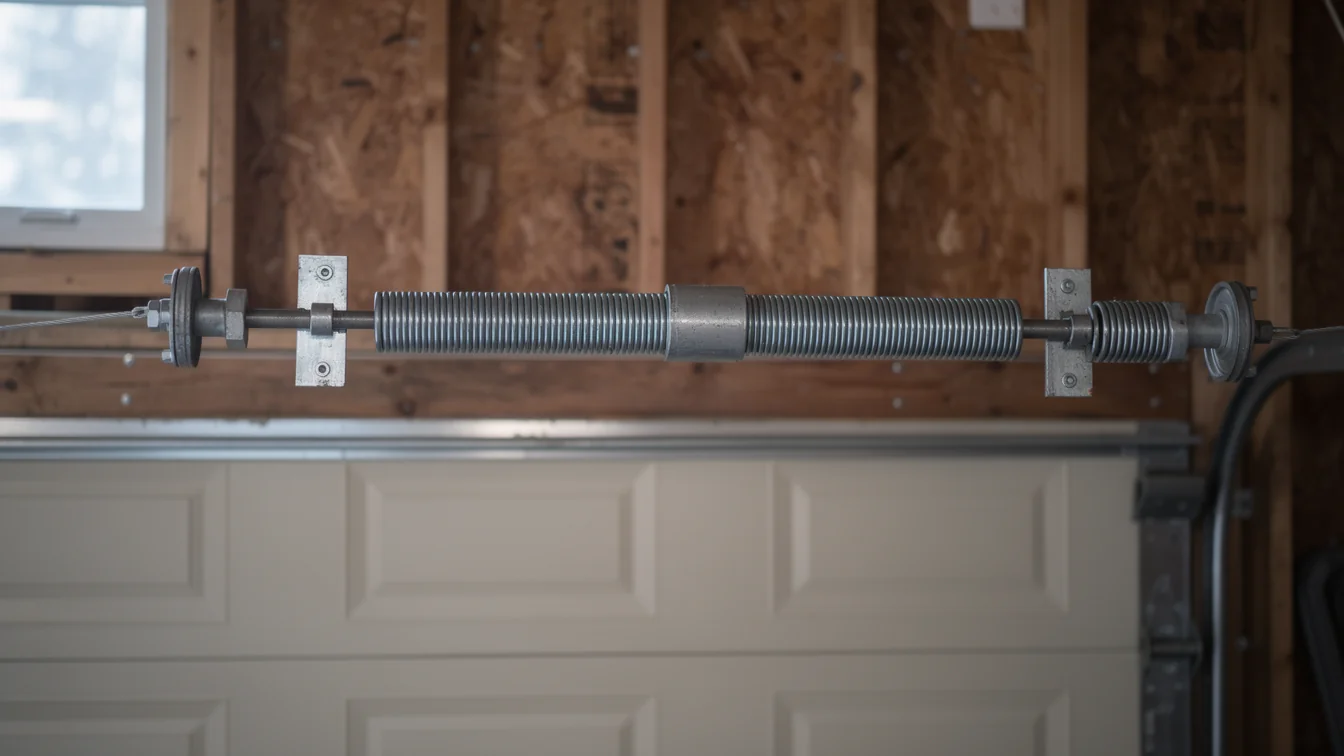
Before you call anyone, look at a few things. First, check whether the door will lift a little by hand with the opener disconnected - if it's dead weight or drops on its own, that's a spring, not an opener problem. Second, look at the spring itself, mounted above the door on the horizontal shaft. A torsion spring that's broken will show a visible gap in the coil, sometimes with the two ends twisted apart.
If the door runs but sounds different than it used to - a grinding noise, a hard jerk at the start of the cycle - that's often a roller or a bearing plate starting to go before the spring actually breaks. Worth noting that early, because it's a cheaper fix than waiting for the spring itself to go.
Check the cables too, especially if your house falls in that 1980s-90s build window common across this area. Cables that have never been replaced can fray near the drum, and a frayed cable under tension is its own hazard, separate from the spring. None of this is a DIY repair once you're talking about the spring or cables - this is about diagnosis, not fixing it yourself. A wound torsion spring holds enough stored force to break a wrist or worse if it lets go while you're working on it.
What the Weather Here Does to It
Springdale sits in a cold-moderate climate band, not the deep-freeze cold of places further north, but enough winter temperature swing to matter for a garage door. The garage is usually the least insulated room in the house, and an unheated garage tracks close to the outside air. Steel springs and steel tracks both contract in the cold, and contraction on a spring that's already worn thin from cycling is what turns a slow fatigue problem into a sudden failure.
This matters more here than it would in a place with a flat, mild climate year-round, because Springdale gets real cold snaps mixed with warmer stretches - the freeze-thaw pattern that's harder on metal and hardware than steady cold ever is. Lubricant on rollers and hinges also thickens in cold air, adding resistance right at the moment the spring is working hardest to lift the door.
If you've noticed your door seems to struggle more on cold mornings than it did in October, that's not your imagination. It's the spring telling you it's close to the end, and the cold is just exposing it sooner than it would in a milder month.
When It Stops Being a DIY Job
Replacing a torsion spring yourself is not a weekend project, and we'll say that plainly: the tools to wind a spring safely aren't something most garages have, and the margin for error is a trip to the ER. If you're comfortable with hand tools and basic home repair, you can still do the checking - lifting the door by hand, looking at the coil, listening for new noises. Past that point, call it in.
Across the wider area - Johnson, Lowell, Elm Springs, Tontitown, Cave Springs, and the other communities within a short drive of Springdale - housing ages the same way, built mostly in that 1979-2013 window, so the spring failures we see follow the same pattern house to house. With 32,903 owner-occupied houses in the broader service area and a median household income of $87,150, most owners here are weighing a straightforward choice: replace the spring and keep the door, or if the door itself is failing in multiple ways at once, replace the whole unit.
One honest limitation: if your door is original to a house built in the 80s or earlier and the track, rollers, and springs are all original, patching one part often just means the next part fails within a year or two. At that point a full door and hardware replacement usually costs less over time than a string of one-off repairs.
Questions
Common questions
Why did my garage door spring break on a cold morning?
Cold weather makes steel contract, and a spring that's already worn from years of daily cycling has less flexibility left to absorb that. Springdale's cold-moderate climate brings real freeze-thaw swings each winter, and that swing is often what pushes a tired spring past its limit. It's rarely the cold alone - it's the cold meeting a spring that was already near the end.
Is it safe to replace a torsion spring myself?
No. A wound torsion spring stores enough force to cause a serious injury if it releases while you're working near it. Checking the door - lifting it by hand, looking at the coil for a gap - is fine to do yourself. Actually replacing the spring needs the right winding bars and experience with how much tension that specific spring size carries.
My house was built in the 1980s - is my spring original?
It's possible. A lot of the housing in and around Springdale dates to the 1980s and 90s, and if the door and opener haven't been upgraded, there's a decent chance the spring is original or a first-generation replacement. A spring that old, cycling daily for three or four decades, is well past the point where cold weather can push it into failure.
Should I repair the spring or replace the whole door?
Depends on the rest of the door. If the track, rollers, and panels are in decent shape and it's just the spring, a straight spring replacement makes sense. If the door is original to an older house and multiple parts are worn - track, rollers, cables, spring all aging together - replacing piece by piece often costs more over a couple of years than replacing the door once.
Recommendation
You Might Also Like
More garage door guides for Springdale homeowners.
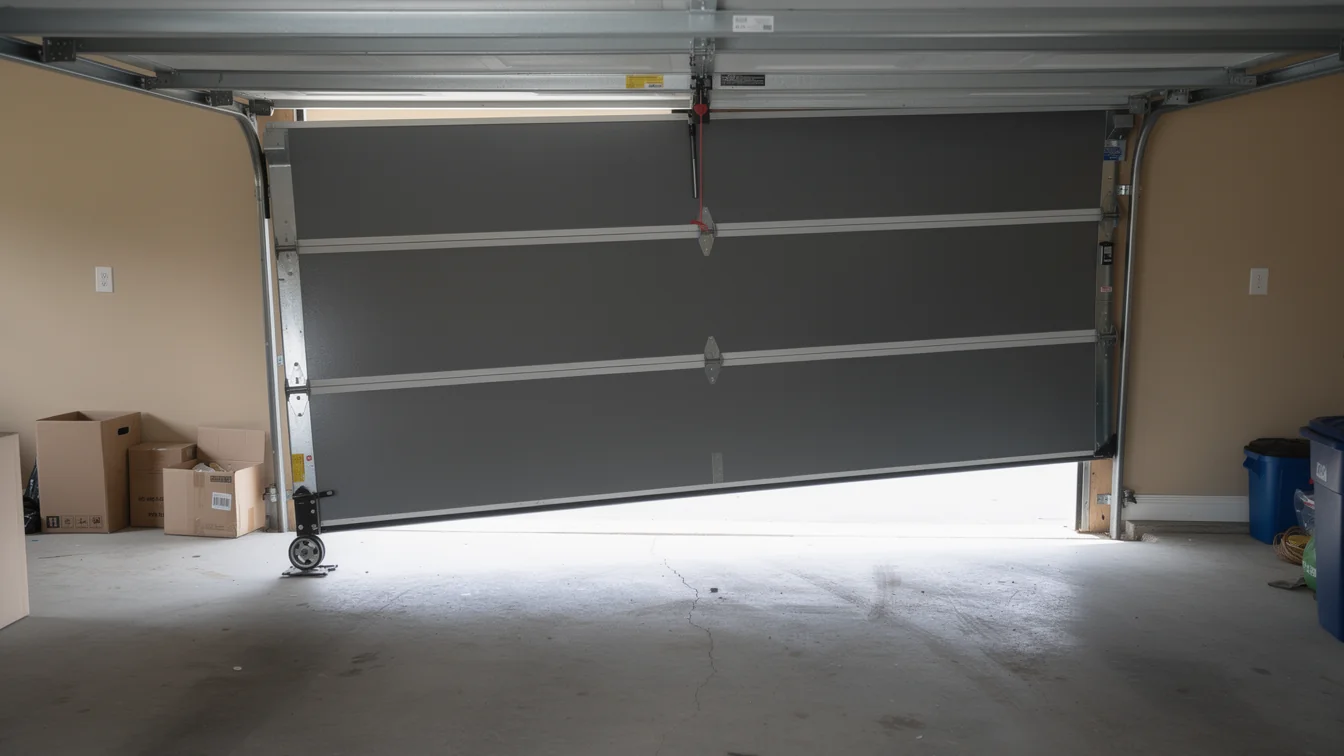
Why a Garage Door Goes Off Track
Springdale's 1980s-90s housing stock and cold winters both play a part in doors jumping track.
Read guide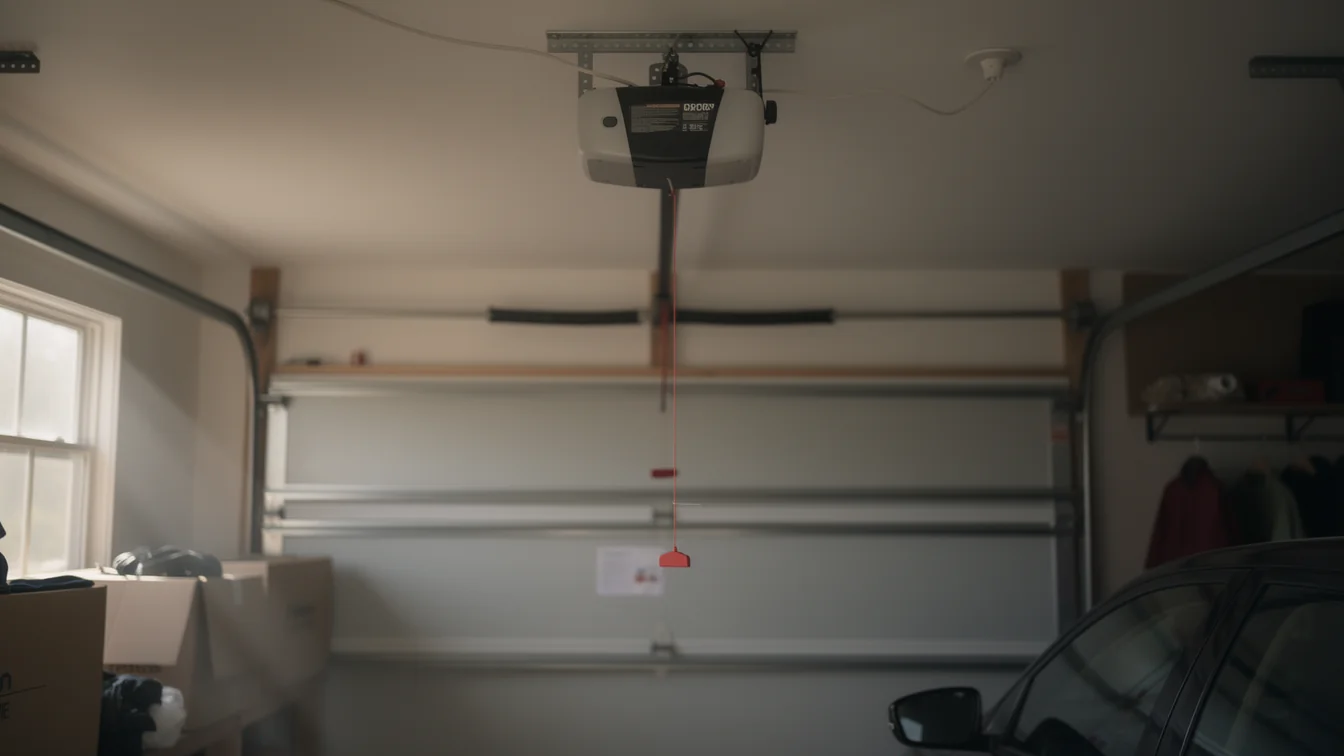
When the Power Goes Out, Your Opener Doesn't Know What to Do
Springdale homes built mostly between 1979 and 2013 lean on openers that don't love winter power loss.
Read guide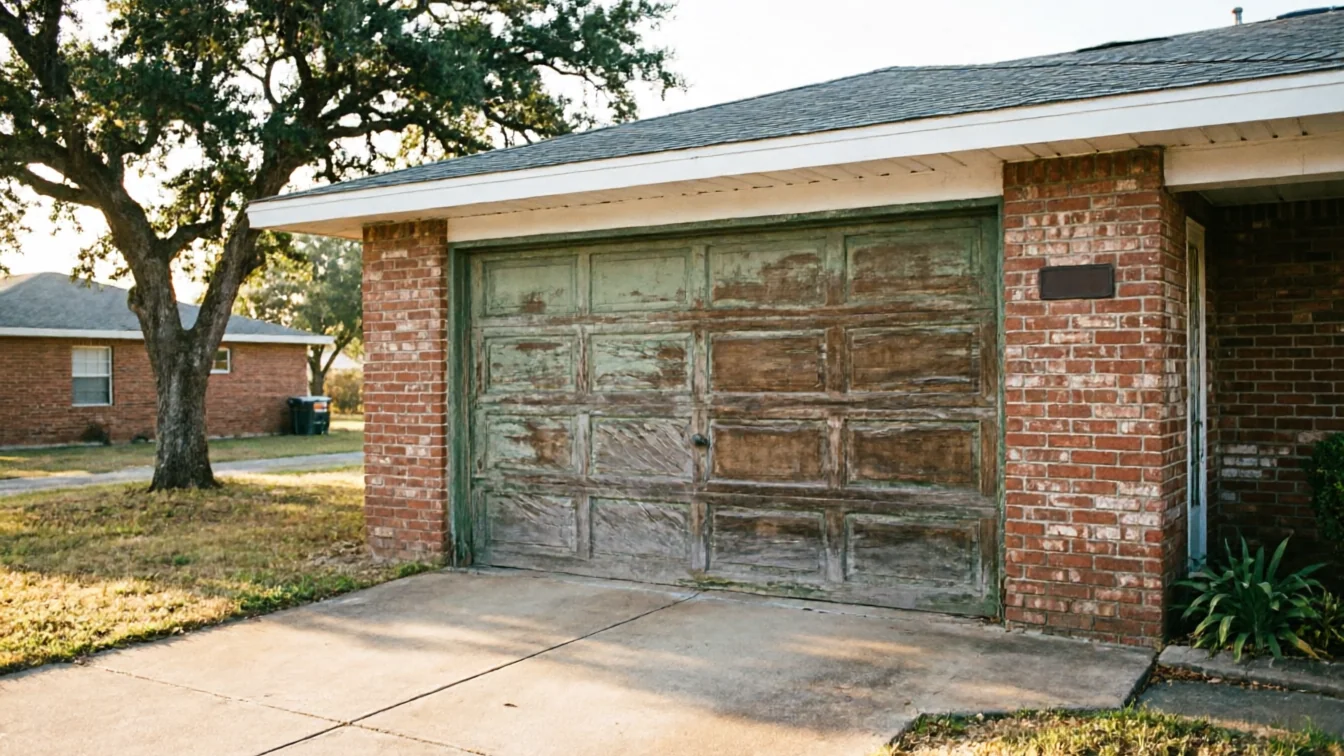
Is Your Springdale Garage Door Worth Fixing, or Done
Springdale homes mostly date 1980s-1998.
Read guideReady when you are
Need a garage door sorted in Springdale?
Springdale Garage Door Pros repairs and installs garage doors, springs and openers in Springdale, AR and the surrounding area.