
Blog
Why a Garage Door Goes Off Track
Springdale's 1980s-90s housing stock and cold winters both play a part in doors jumping track. Here's what to check before you call Springdale Garage Door Pros.
What Is Going On
A door off track means the rollers have jumped out of the metal channel that's supposed to guide them up and down. On a lot of the houses we work on here, built between 1979 and 2013 with most of the stock going up through the 1980s and 90s, the tracks are original to the house and have never been realigned. Over twenty to forty years, the brackets holding those tracks to the framing loosen a little at a time. Nobody notices until the day a cable snaps slack, or someone backs into the door, and the whole panel jumps sideways out of the channel in one go.
It's rarely one single cause. Usually it's a bent track from a bump, paired with a roller that's worn down enough to wobble in the channel, paired with a bracket that's a quarter-inch looser than it should be. Any one of those three might not take the door off track by itself. Together, they do. On the older end of that 1980s-90s stock, we also see galvanized track that's thinner gauge than what gets installed now, which bends easier under the same impact.
What to Check
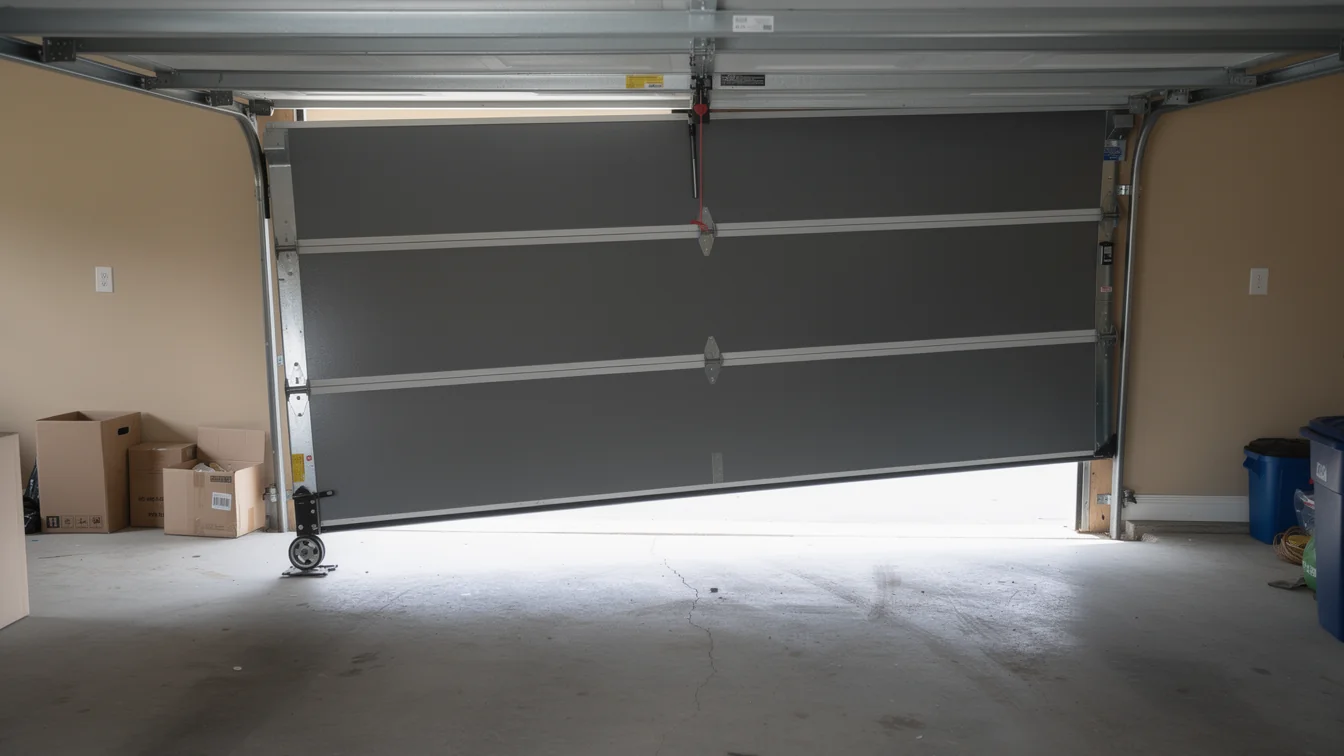
Before you touch anything, look at where the door actually sits. If one side is higher than the other, or there's a visible gap between the roller and the track on one panel, that's your off-track section. Don't force the opener to run it - if the door is even partly dislodged, running the opener can tear the track off the wall or bend the panel itself.
Check the track brackets along the vertical section first. These are the lag bolts holding the track to the wall framing, and on houses from the 1980s and 90s they were often set with shorter fasteners than what's used today. A loose bracket lets the whole track flex sideways under load, which is often the first domino. Also look at the rollers themselves - plastic rollers from that era turn brittle and chip, and a chipped roller doesn't sit square in the channel anymore.
If the door came off at a roller near the bottom panel, that's usually a bent track from an impact. If it came off higher up, near the opener arm, that's more often a loose bracket or a broken cable letting the panel drop unevenly on one side.
What the Weather Here Does to It
Springdale sits in a cold-moderate climate band, which means real freeze-thaw cycling through the winter months rather than one hard freeze and done. That cycling matters more to a garage door than people expect. Metal track contracts in cold and expands again as temperatures climb back up during the day, and that repeated movement works lag bolts and bracket screws loose over a season faster than it would somewhere with a flatter winter.
It also stiffens up the lubricant in the rollers and hinges, so a door that ran smooth in October can start to bind and jerk in January. A jerking door puts uneven load on the track, and uneven load is exactly what pushes a marginal roller out of the channel. We see more off-track calls in the first real cold snap of the season than almost any other time of year, and it's rarely the door that failed first - it's a bracket that was already loose from the last freeze-thaw cycle finally giving up.
When It Stops Being a DIY Job
Tightening a loose bracket or popping a roller back into a straight section of track, a lot of homeowners can handle that with the door manually lifted and secured. What you shouldn't do yourself: anything involving the torsion spring, or a door that's come fully off the track on both sides. Springs are under enough tension to break a hand, and a door hanging unevenly on two tracks can fall without warning once you start loosening hardware.
We'll also say plainly that if the track itself is bent rather than just knocked loose, bending it back rarely holds. A track that's been forced straight once tends to go again within a season, and at that point replacing the section costs less in the long run than a second visit. That's the honest tradeoff - a repair that looks fixed isn't always fixed for good.
Questions
Common questions
Why did my garage door suddenly come off the track with no warning?
Usually it wasn't sudden - a bracket or roller had been loosening for a while, often through winter freeze-thaw cycling, and a bump or a snapped cable was just the last straw. On houses from the 1980s and 90s, original hardware has had decades to work loose before it finally lets go.
Can I push the door back onto the track myself?
If only one roller is out and the track isn't bent, you can sometimes guide it back in with the door manually supported. If the door is off on both sides or the track looks bent, don't try - call it in before you lose a finger or drop a panel.
Does cold weather really affect the track hardware?
Yes. Springdale's cold-moderate climate means repeated freeze-thaw cycling through winter, not one hard freeze. That cycling works lag bolts and bracket screws loose faster than a milder climate would, which is why off-track calls cluster around the first real cold snap of the season.
Recommendation
You Might Also Like
More garage door guides for Springdale homeowners.
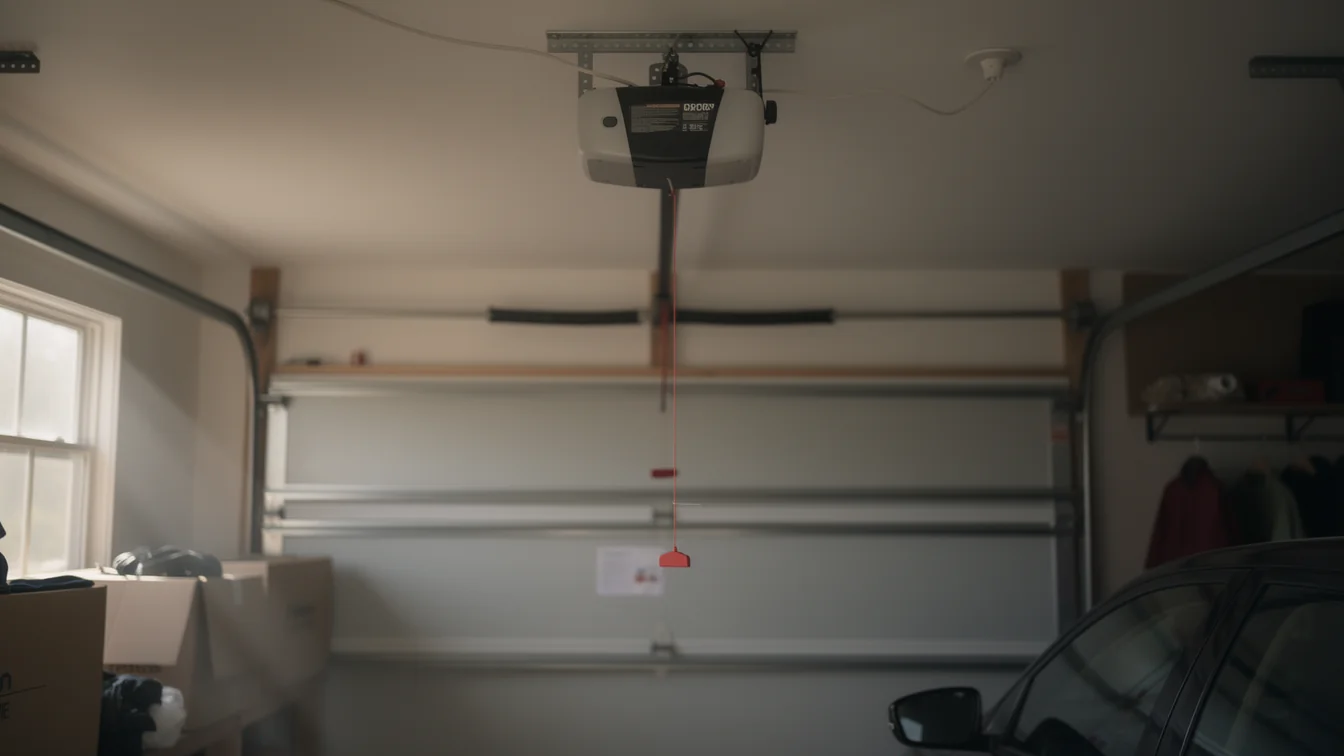
When the Power Goes Out, Your Opener Doesn't Know What to Do
Springdale homes built mostly between 1979 and 2013 lean on openers that don't love winter power loss.
Read guide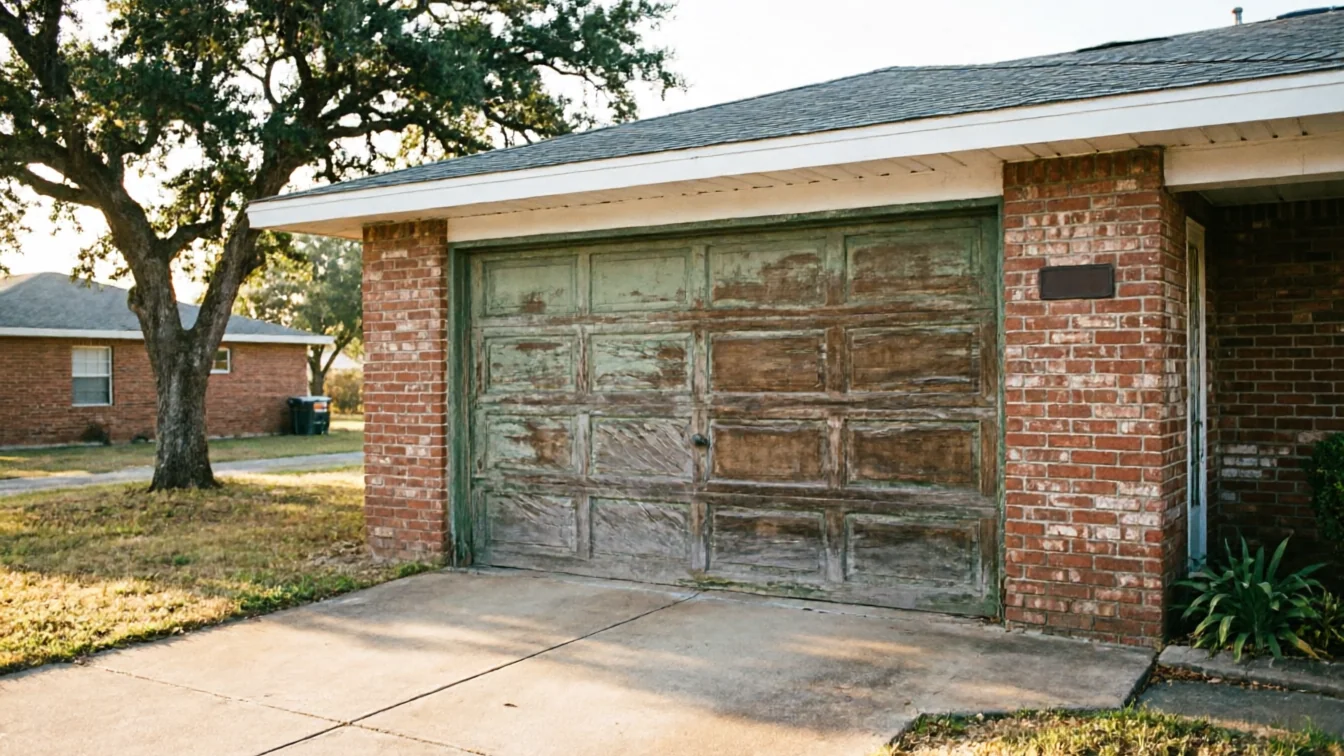
Is Your Springdale Garage Door Worth Fixing, or Done
Springdale homes mostly date 1980s-1998.
Read guide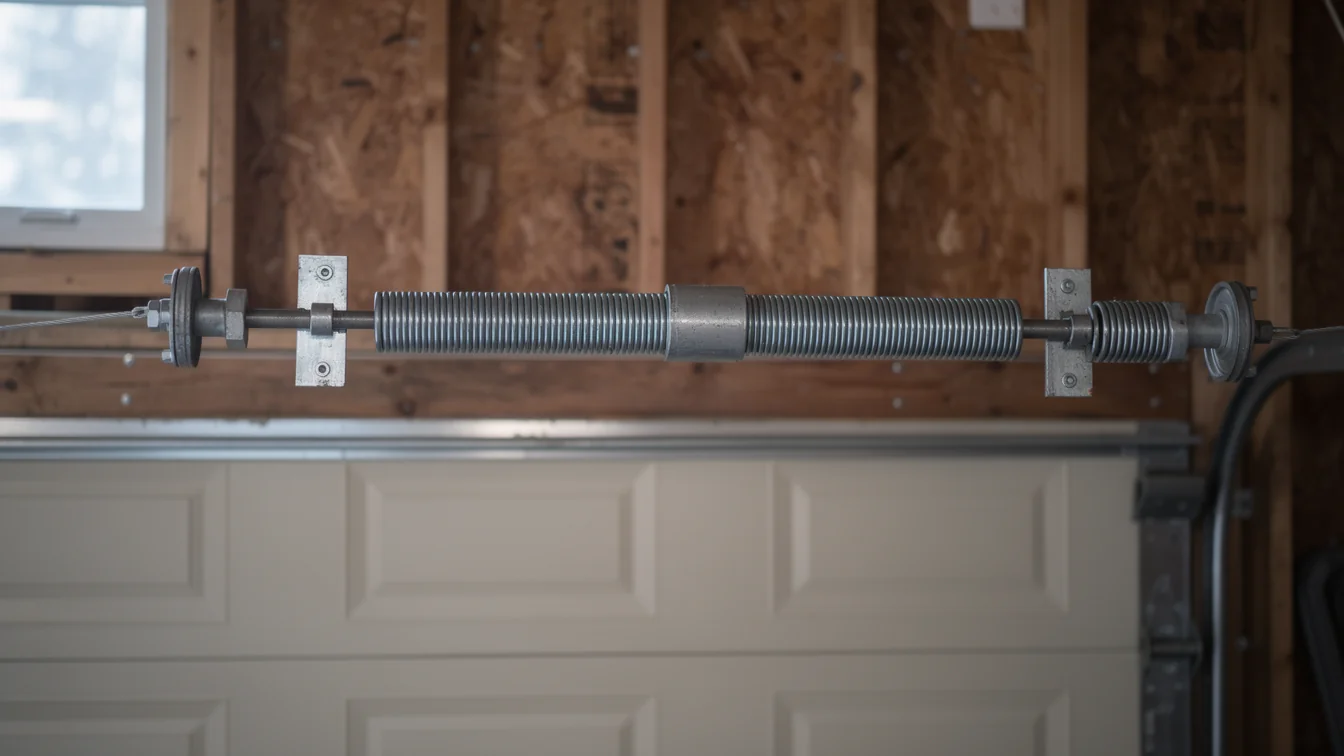
When a Spring Goes in Cold Weather Around Springdale
Why garage door springs snap in Springdale's cold months, what to check first, and when a 1980s-90s door needs more than a DIY fix.
Read guideReady when you are
Need a garage door sorted in Springdale?
Springdale Garage Door Pros repairs and installs garage doors, springs and openers in Springdale, AR and the surrounding area.